Customer Database: Definition, Importance, and How it Help your Marketing & Customer Retention
What is a customer database?
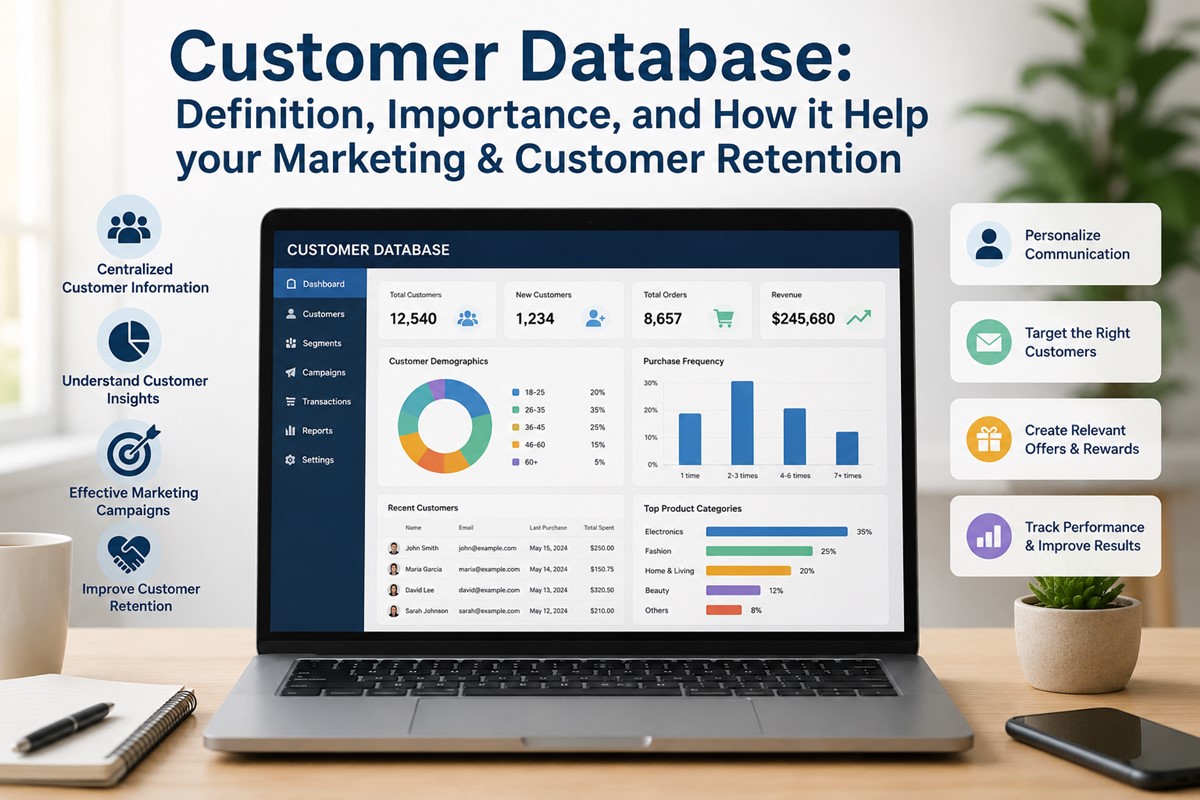
A customer database is a centralized system that stores and organizes customer information, enabling businesses to make informed decisions and improve sales & marketing strategies. Commonly stored data includes basic information such as name and contact details, as well as purchase history, customer preferences, visit frequency, reward activity, and behavioral patterns.
Why is it important for your business?
With just one tap, all of this information is available in a single platform. You can identify your clients, analyze customer insights, and evaluate marketing campaigns and customer retention through special promotions or rewards.
A proper customer database system allows businesses to manage customer information more efficiently instead of relying on scattered records, manual lists, or incomplete purchase details. When customer data management is done properly, it becomes easier to understand buying patterns, improve communication, and create better customer experiences.
How to use a customer database to grow your business
A customer database gives your business a clearer view of who your customers are, how often they buy, and what encourages them to return. Instead of treating every customer the same way, you can use customer data to improve marketing, strengthen customer relationships, and support long-term customer retention.
Build a structured customer database
A structured customer database helps your business organize customer information in a way that is easy to access, manage, and use for future campaigns. This allows you to keep records more organized while making customer information easier to access and use for future campaigns.
- Identifiable customers
- Trackable purchase history
- Clearer view of customer preferences and buying behavior
Customer segmentation
Customer segmentation allows you to group customers based on their activity, spending behavior, and engagement level. This helps your business understand which customers need more attention and which customers are already loyal.
You can segment customers into groups, for example:
Building a Customer Database = Building Power
- High spenders (VIPs)
- Inactive customers (haven't visited in 30 - 60 days)
- Frequent visitors
- First-time customers
By using a customer database for marketing, businesses can send more relevant messages to different customer groups instead of sending the same promotion to everyone.
Use customer database for targeted marketing campaigns & promotions
A customer database for marketing allows businesses to create more relevant and targeted campaigns. With the right customer database system, you can run promotions based on real customer behavior instead of guesswork.
- Send birthday rewards
- Trigger 'come back' offers
- Reward high-value customers
- Push specific product promotions
- Promote relevant offers based on past purchases
- Send targeted messages to improve customer engagement
A well-organized client database helps everything run smoothly while keeping records accurate and secure. It serves as the focal point that links your customer engagement, purchase history, and data-driven insights, facilitating quicker decision-making and stronger customer connections.
How a customer database system supports customer retention
Customer retention is one of the biggest reasons why a customer database is important for business. It is not just about collecting customer details, but about using those details to encourage customers to return again.
With a proper customer database system, businesses can track customer behaviour such as purchase frequency, last visit date, spending amount, reward redemption, and product preferences. This helps identify which customers are active, which customers are becoming inactive, and which customers are worth rewarding more often.
For example, if a customer has not visited in 30 to 60 days, your business can send a 'come back' promotion to encourage them to return. If a customer frequently spends above average, you can offer VIP rewards or exclusive deals. If a customer usually purchases a specific product, you can send targeted promotions that match their interests.
This makes customer retention more strategic and measurable. Instead of waiting for customers to come back on their own, businesses can use customer data management to remind, reward, and re-engage them at the right time.
Conclusion
Over time, these small details come together to create a large database of actual clients that you can reach at any moment. Instead of just waiting and hoping they return, you can remind them, reward them, and retain them. At that point, consumer data becomes one of your most important business assets instead of just a box of information.
By using a customer database for marketing, customer retention, and customer engagement, your business can turn everyday customer information into practical strategies that drive repeat sales and long-term loyalty.
With the right customer database system, your business can stop guessing what customers want and start using data to build stronger relationships, better campaigns, and more consistent sales. To explore how a loyalty system can help you manage customer data, run campaigns, and improve retention, visit the OneWayLoyalty features.
FAQ
What is customer data management?
Customer data management is the process of collecting, organizing, updating, and using customer information properly. Good customer data management helps businesses maintain accurate records, understand customer behaviour, and create better marketing and retention strategies.
How can small businesses use a customer database?
Small businesses can use a customer database to keep track of regular customers, identify inactive customers, reward loyal buyers, and send targeted promotions. This helps small businesses build stronger relationships and encourage repeat purchases without relying only on new customers.
What is a customer database system?
A customer database system is a platform or software that stores, organizes, and manages customer data. It allows businesses to track customer behaviour, purchase history, reward activity, and marketing campaign performance in one place.
How does a customer database help with marketing?
A customer database for marketing helps businesses send more relevant campaigns based on customer behaviour. For example, businesses can send birthday rewards, 'come back' offers, VIP promotions, or product recommendations based on past purchases.